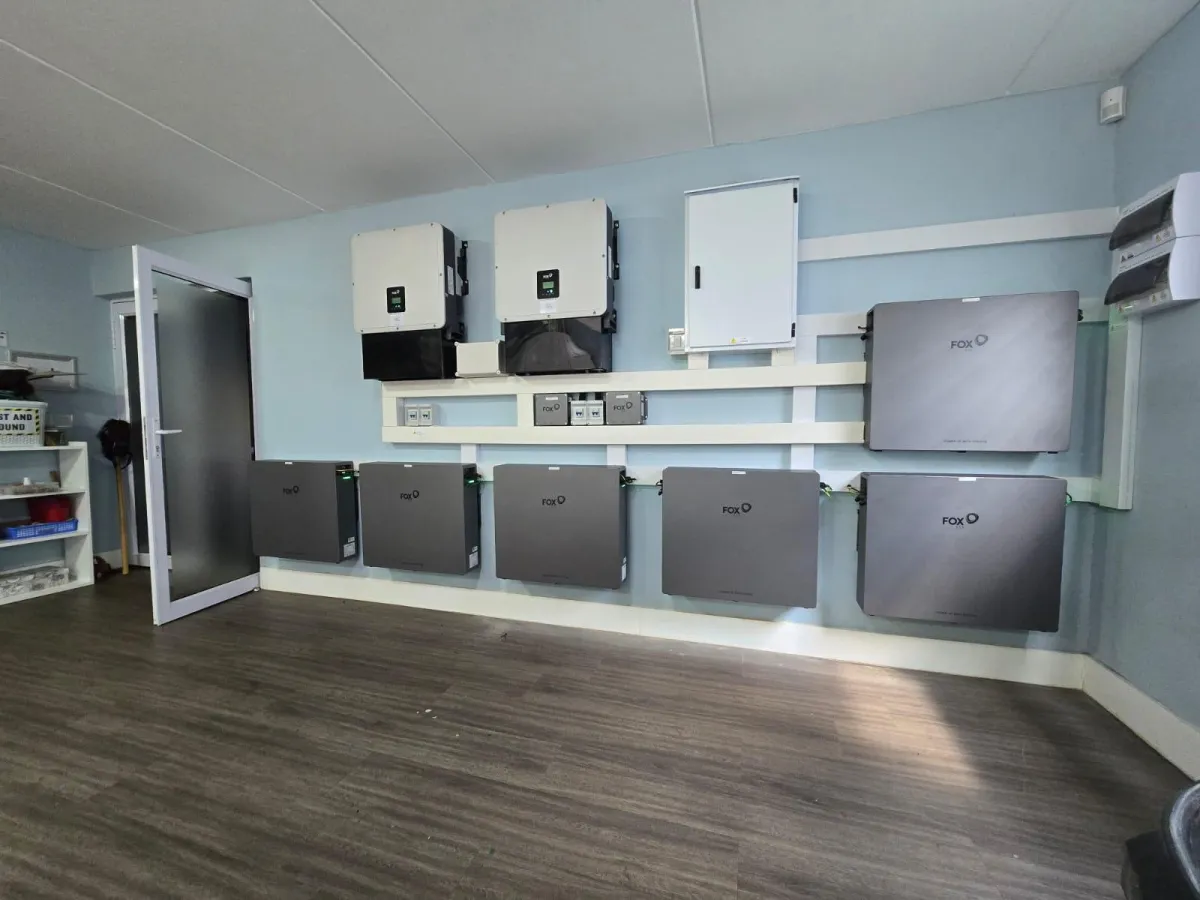
From Downtime to Dominance: How A Solar Panel System Can Secure Your Factory's Future
From Downtime to Dominance: How A Solar Panel System Can Secure Your Factory's Future
The silence is deafening. Your factory floor, usually a hive of activity, is still. Deadlines are looming, orders are waiting, and with every passing minute, revenue disappears. This isn't a hypothetical scenario; it's the harsh reality for countless businesses every time the grid fails. The true cost of a power outage isn't just a line on an electricity bill; it's the catastrophic loss of production.
For factory owners, the conversation around energy is shifting. It's no longer just about managing the rising cost of electricity. It's about eliminating the devastating impact of power outages on business and securing operational continuity. This is where investing in a commercial solar panel system transforms from a green initiative into a powerful strategic move for financial stability and competitive dominance.
Beyond the Light Switch: The True Cost of an Unreliable Grid
When the power goes out, the problems go far beyond a dark workspace. For a factory, the consequences are immediate, costly, and can ripple through every aspect of the business.
The Security Threat
An inactive factory is a vulnerable one. As one of our clients shared, frequent power cuts left his facility exposed. Criminals became so brazen they would wait for the power to fail, disabling the alarms and electric gates. "They would then take the gate off the rollers, come in, and have as much time as they liked to take all your computers and whatever else they wanted," he recounted. A reliable commercial solar power solution provides more than just energy; it provides constant security, keeping your alarms, cameras, and gates powered and your assets protected.
The Production Killer
For any manufacturing business, downtime is the enemy. The core issue, as our customer explained, was that the loss of revenue from stalled production was a far bigger problem than the cost of electricity itself. Many businesses rely on backup power for a factory, like a diesel generator, but these often fall short. A generator might be able to run the lights and a few machines, but can it handle the heavy-lifting equipment, like a large compressor, that your production line depends on? More often than not, the answer is no, leaving you with partial solutions and continued losses.

Reputation Damage
What happens when you can't deliver on a promise? "There's times where we would maybe have to tell people, 'oh, it's gonna take longer,'" one of our clients admitted. The embarrassment of these conversations is one thing; the long-term damage to your brand's reputation is another. In a competitive market, reliability is currency. Securing your power supply is a direct investment in customer trust and your reputation as a dependable partner.
The Solar Solution: More Than Just Panels
Addressing these critical issues requires a robust and reliable solution. A modern commercial solar power solution is engineered to meet the demanding needs of an industrial environment.
Powering Heavy Machinery with Confidence
A common question we hear is, "Can a solar system power heavy machinery?" The answer is an emphatic yes. Brendan from Level Products story is a perfect case study. His operation relies on a massive compressor, an energy-intensive machine whose startup surge was too much for his old generator. By integrating a soft starter with his new solar system, the compressor now runs flawlessly. A properly designed solar installation isn't just for lights and computers; it’s a powerhouse capable of running your entire production line.
From Grid-Dependent to Energy-Independent
Imagine a future where grid failures are a non-event for your business. A solar panel system gives you control over your power supply, allowing you to maintain full operations even when the rest of the grid is down. This move toward energy independence means you dictate your production schedule, not Eskom or City Power. It's about owning your power and, by extension, your factory's productivity and future. Turning sunshine into profits.
Controlling Costs in a Volatile Market
With the cost of electricity going up constantly, budget predictability is a major challenge. Solar power stabilises this variable. Furthermore, a smart solar system can help you avoid peak demand charges—the exorbitant electricity rates charged during periods of high usage. As Brendan explained, "We are now able to make sure we hardly ever use power during the peak period." This strategic energy use provides significant savings, turning a volatile expense into a controlled, predictable cost.
Neil Britz from Crown Technologies speaks to Brendan, Owner of Level Products about their real experience going solar with Crown Technologies
Choosing the Right Partner for Your Power Needs
Transitioning to solar is a significant investment, and the success of the project hinges on the expertise of your installer. Brendan noted that he spoke to several contractors but ultimately chose the one that offered superior service and a deeper understanding of his needs - Crown Technologies.
Look for a commercial solar installer who provides a full-service, turnkey solution—from initial assessment and system design to flawless installation and ongoing maintenance. The goal should be a system that, as Brendan described, "has been running perfectly since it was installed."
Questions to ask a potential solar installer:
Do you have experience with industrial or manufacturing facilities?
Can you provide case studies of businesses similar to mine?
How do you size a system to handle our specific machinery and load requirements?
What does your maintenance and support plan look like after installation?
The Financial Case: Calculating the ROI of Reliability
When evaluating theROI of commercial solar panels, it's important to look beyond the monthly electricity savings. The true financial case is built on risk mitigation and revenue protection.
Calculate the cost of inaction. How much revenue do you lose for every hour, or every day, of downtime? What is the cost of a potential security breach? When you factor in the protected revenue, enhanced security, and predictable energy costs, the investment in a solar power system pays for itself not just in savings, but in secured future earnings. With various commercial solar financing options available, the upfront investment is more manageable than ever.
Take Control of Your Factory's Future
Stop letting an unreliable grid dictate your production schedule, compromise your security, and damage your reputation. An investment in a commercial solar panel system is an investment in your factory's resilience, profitability, and future. It's time to move from downtime to dominance.
Frequently Asked Questions (FAQ)
1. Is a commercial solar system powerful enough to run heavy industrial machinery? Absolutely. When designed by experts, a commercial solar installation can be scaled to meet the high energy demands of heavy machinery, including large compressors, welders, and CNC machines. Integrating components like soft starters can help manage the high initial power draw of such equipment, ensuring smooth and reliable operation.
2. What's the difference between a commercial solar installation and a diesel generator? While both provide backup power, a commercial solar vs diesel generator comparison reveals major differences. A generator is a temporary fix that relies on costly, fluctuating fuel prices and requires significant maintenance. A solar system is a long-term asset that provides clean, silent power, drastically reduces energy costs, requires minimal maintenance, and operates seamlessly the moment the grid fails.
3. How long does it take for a commercial solar system to pay for itself? The payback period, or ROI of commercial solar panels, varies based on system size, energy consumption, and local electricity rates. However, when you factor in avoided production losses, enhanced security, and significant tax incentives, many businesses see a compelling return on investment in just a few years.
4. What kind of maintenance does an industrial solar system require? Industrial solar systems are designed for durability and require very little maintenance. The main task is periodic cleaning of the panels to ensure optimal sunlight absorption. Most systems come with monitoring software that alerts you and your installer to any potential issues, making maintenance a "set it and forget it" affair for the business owner.
Ready to Secure Your Operations?
If you’re comparing Solar Panel Systems, Evaporative Air Cooler Systems, or Water Filtration and Storage for your property, you need a solution that fits your load, your building, and your goals. We engineer integrated systems that reduce electricity spend and stabilise operations without complexity.
Don't let outdated systems drain your budget. Contact our experts today to book a no-obligation assessment or click on the yellow chat button to chat live with Agent Alex.
Find out how you can save? Book a free Assessment.


